
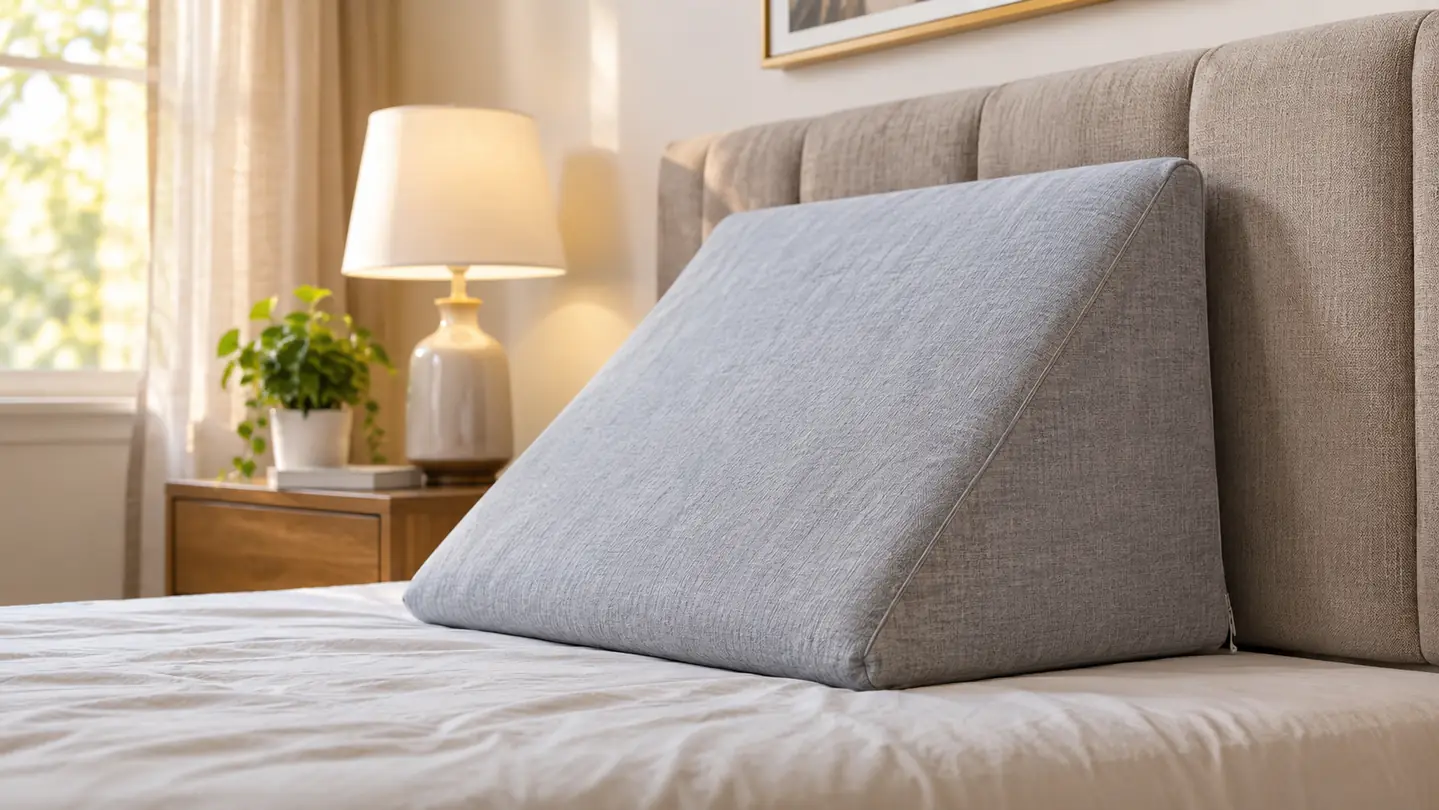
Three months ago Linda set a box on the kitchen counter and said, try this or I'm moving into the guest room for good. I've been a loud snorer for close to twenty years. She's the one who noticed the pauses in my breathing, long before I thought there was anything worth noticing. A home sleep test later, my doctor told me I had moderate obstructive sleep apnea, and I've slept with a CPAP machine and a nasal pillow mask for about three years now. The mask does its job. What it does not do is keep my mouth from drying out by four in the morning in a Colorado bedroom that is dry nine months out of the year. That was the actual problem I was trying to solve. The Kölbs Bed Wedge Pillow was the second wedge I'd tried.
I'll say the part most listings bury. Sleep apnea is a medical condition. It needs a sleep study and a doctor, and no pillow sold on the internet is a treatment for it. A wedge changes the angle your head and chest sit at while you sleep. That's all it does, and for some people that change is worth a great deal. For me it was. What follows is what three months on the 7.5 inch standard width model actually looked like, including the parts I don't love.
The Quick Verdict
Firm, well covered, and tall enough to end my 4 a.m. dry mouth. It is a positioning tool, not a treatment, and the 7.5 inch rise will be too shallow for side sleepers and broader frames.
Amazon Check Today's Price →The 7.5 inch wedge that got me out of the recliner and back into my own bed
Kölbs builds this in two heights. I used the 7.5 inch standard width for three months and it earned its spot on my side of a queen bed. If you sleep on your side or carry more weight through the chest and shoulders, read the height section below before you order.
Amazon Check Today's Price on Amazon →How I've Used It
I've slept on it every night for three months, minus four nights visiting my son in Kansas. It sits on my side of a queen bed, pushed against the headboard and pulled down about six inches so my hips aren't sliding into a trench. The first week I tried it under the fitted sheet because I thought that would look tidier. The sheet popped off the corners by Wednesday, so I gave up and left the wedge on top, which is where it belongs. Linda's verdict on how it looks was that it beat the stack of three pillows I'd been propping myself on for a decade. Low bar, but I'll take it.
The first night was not the night I noticed anything good. I was aware of it the whole time, the way you're aware of a new pair of boots. I woke around two with a stiff neck because I'd slid down the incline and my chin was on my chest. Night two I moved it up toward the headboard and slept through. By the end of the first week I'd stopped thinking about it, which is the highest compliment I can pay a piece of bedroom equipment. Three months in it has not flattened out. The corner nearest my shoulder has softened maybe a quarter inch. That's the whole story of its wear.
Setup took no time at all. It comes out of the box and it goes on the bed. There's nothing to inflate, nothing to plug in, nothing to adjust at two in the morning. Linda ran the removable cover through the wash twice and it came out the same as it went in. That's the entire maintenance routine, and after three years of scrubbing CPAP parts in the bathroom sink, I appreciate a thing that takes care of itself.

What the 7.5 Inch Height Actually Feels Like
Kölbs sells this in two heights, 7.5 inch and 12 inch. Mine is the 7.5 inch, which measures 24 inches long by 24 inches wide by 7.5 inches high. On a queen mattress that puts my upper body at a gentle incline, enough that gravity is working with me but not so much that I feel like I'm laid up in a hospital room. That was the reason I chose it over the taller model. I wanted to sleep in my own bed, not be propped up like a patient waiting on a nurse.
Here's where it won't suit everybody. At 7.5 inches the rise is gentle, and gentle is the point, but gentle is not enough for every body. If you sleep on your side, or if you're broader through the chest and shoulders than I am, you'll likely want the 12 inch. I'm about five foot eleven and I dropped a fair amount of weight in my fifties, and 7.5 inches is right for me sleeping on my back. My brother in law, who is wider through the shoulders than I ever was, tried mine for one night and said there wasn't enough angle in it for him. I believe him. He's not a complainer.
The Cover, the Foam, and the Two Things I'd Change
The upper layer is 1.5 inches of plush memory foam over the base foam, and that's what keeps it from feeling like a slab of upholstery with a pillowcase on it. You sink in just enough that your shoulder blade stops complaining, and then the base holds you where you are. The cover is a jacquard polyester with the pattern woven into it rather than printed on top, and it's removable and machine washable. If you've owned a wedge with a thin cover that pilled after a month, this is a different animal entirely.
Two things I'd change. First, the foam has that new-couch smell for the first three or four nights. It faded and it's gone now, but I noticed it, and if you're sensitive to that kind of thing, plan on airing it out in a spare room for a couple of days before you sleep on it. Second, nothing holds it to the mattress. It stays where I put it on my sheets until I roll over hard, and then I nudge it back with my elbow. Small thing, takes a second, but it's real.
The manufacturer warranty runs one year. I haven't had to test it, and I don't expect to. The pillow weighs just under four pounds, so shifting it to change the sheets isn't a chore. The 24 by 24 footprint takes up the upper half of a queen bed and no more than that, which matters if your wife has claimed her half with three pillows and a body pillow of her own.
What I Liked
- The incline ended most of my dry mouth nights within the first week
- 1.5 inches of memory foam on top keeps the surface from feeling like bare upholstery
- Removable jacquard cover has survived two machine washes with no pilling
- 24 by 24 footprint fits the top of a queen bed without stealing the whole thing
- Has not flattened after three months of nightly use
- Light enough at just under four pounds to move for sheet changes
Where It Falls Short
- The 7.5 inch rise is too shallow for side sleepers and broader frames
- New foam smell lingers for the first three or four nights
- Nothing anchors it to the mattress, so a hard roll means shoving it back
- Takes up bed space permanently, and there is no way around that
I went from waking at four in the morning with a mouth like sandpaper most nights to maybe twice in three months. That's the review, really. Everything else is details.
Dry Mouth, Dry Nose, and a Colorado Winter
The dry mouth is the reason I kept using it past week one. Before the wedge I'd wake at four with my tongue stuck to the roof of my mouth and a water glass I'd drained without remembering doing it. With my head and chest raised, my mouth stayed closed more of the night. In three months I've had that cracked, cotton feeling maybe twice, and both times were nights I'd fallen asleep on the couch before I ever made it to bed. The bedroom is still dry. I still run a humidifier from November through March. The wedge just stopped the air from sitting in my open mouth for eight hours.
The nose side of it surprised me more. Colorado altitude plus forced-air heat equals a nose that has had enough by February, and I've bought saline spray by the multi-pack for years. Sleeping at an angle seemed to keep my nasal passages clearer, and I've used less spray this spring than any year I can remember. I can't tell you the mechanism, because I'm a retired delivery driver and not a respiratory therapist. I can tell you what the last three months looked like on my nightstand, and it was a fuller bottle than usual.
Sleeping With a CPAP on an Incline
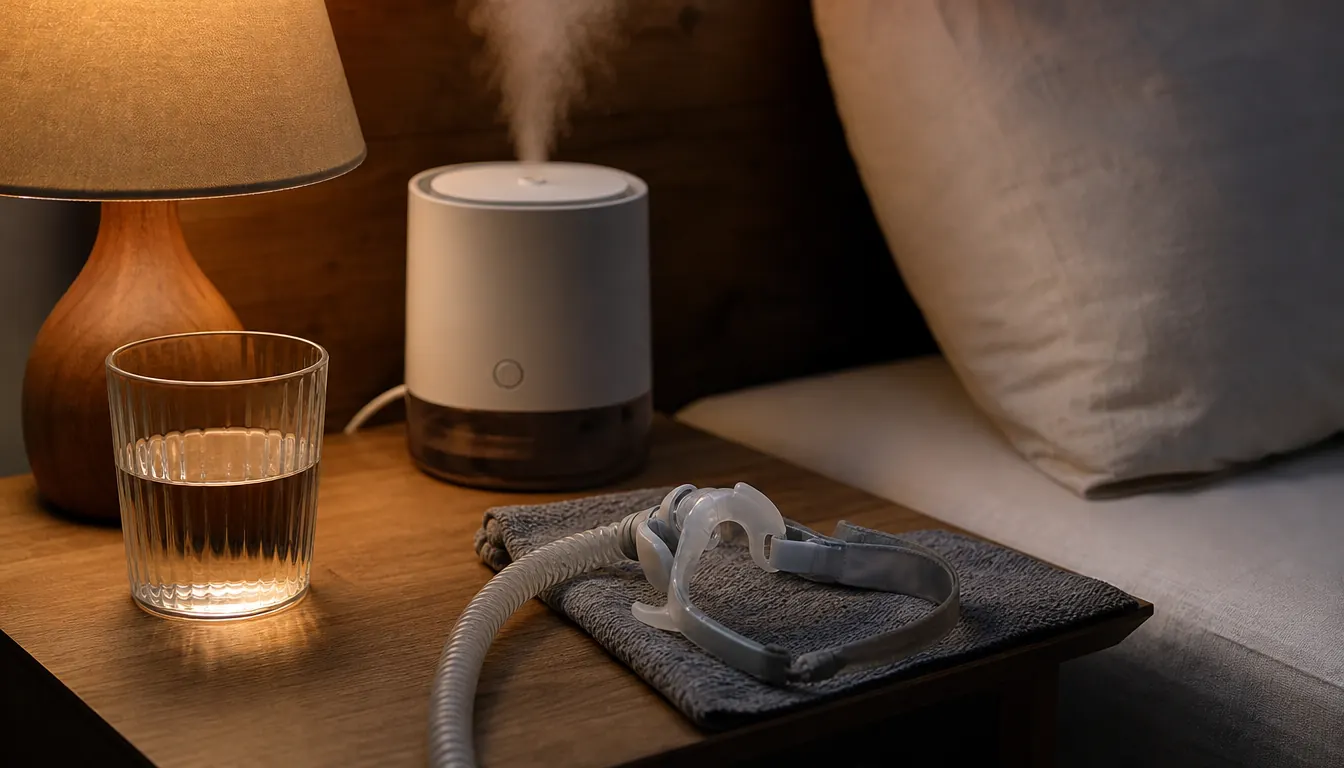
Nobody warned me that a wedge changes how your mask sits. Raising your chest changes the angle of your neck, and that changes how the nasal pillows rest under your nose. The first two nights I had a leak whistle around one nostril because the mask was being pulled at a slightly different angle than it was used to. I loosened the headgear one notch and ran the hose over the top of the headboard instead of across the nightstand, and that solved it. If you wear a full face mask, expect a few nights of fiddling before you get the seal back. It's worth the fiddling, but nobody should pretend it's plug and play.
The other thing worth knowing is that the incline helped my mask in one specific way. When I slept flat I'd roll onto my back, my jaw would drop open, and I'd get that blowfish feeling where the air goes in your nose and straight out your mouth. At an angle that happened less often. Less, not never. On the nights it still happened I'd wake up with the pressure going nowhere and have to reset the mask and start over. It went from a few times a week to a few times a month, and a few times a month I can live with.
What It Did Not Fix
The wedge did not fix my snoring, not entirely. Linda says it's quieter and the pauses she used to hear are less frequent, but she still keeps earplugs in the nightstand drawer for my bad nights. It did not fix my apnea either, and I want to be plain about this one. I still wear the mask every single night, and I still see my sleep doctor on schedule. When I skipped the machine for an afternoon nap on the wedge, I felt exactly as rotten afterward as I did before I ever bought it. If you have diagnosed apnea and you're thinking a pillow will let you retire the CPAP, that's not how this works, and it isn't a small mistake to make with your health.
What it did fix is my relationship with my own bed. Two years ago I'd migrated to the recliner in the living room most nights, because sitting up was the only way I could breathe comfortably and wake without a mouth full of sand. Linda hated it. My back hated it more. Since the wedge arrived I've slept in the bed every night but the four in Kansas. That's the trade I was after. It isn't a cure. It's a better place to put my head.
If you've been sleeping on a stack of pillows, the difference is that a stack shifts. Mine would be a foot high at eleven o'clock and flat by two, and I'd wake with my chin down and my neck kinked. The wedge doesn't move like that, because it's one piece of foam holding one angle all night. The trade is that a stack of pillows costs you nothing and this doesn't, and a stack will never claim the top half of your bed. If you're weighing the two, that's the honest shape of the decision, and I've been on both sides of it.
Who This Is For
This is for a back sleeper who wants a gentle, consistent incline and has been making do with pillows that collapse by midnight. It's for someone with reflux, or a dry mouth, or a nose that closes up at night, who has already talked to a doctor about the apnea question. It's for a CPAP user who wants a better angle for the mask and does not want a twelve inch ramp sitting in the middle of a normal bedroom. If that reads like your situation, this is the one I'd hand you, and I'd tell you to give it a full week before you decide.
Who Should Skip It
Skip it if you sleep on your side. The 7.5 inch angle won't give a side sleeper what a side sleeper needs, and the 12 inch model is the one you want instead. Skip it if you're broad through the chest and shoulders and you're after a real incline rather than a suggestion of one. Skip it if you're expecting it to replace a machine or a diagnosis, because it won't, and some of the reviews promising that scare me a little. And skip it if a permanent piece of furniture on your bed would bother you, because that is what it becomes, night after night, for as long as you own it.
Three months in, it's the one thing on my side of the bed I'd buy again without thinking twice
Kölbs makes two heights for a reason. Be honest with yourself about how you sleep and how much of the bed you're willing to give up, then pick the one that matches. That's the whole decision.
Amazon Check Today's Price on Amazon →