
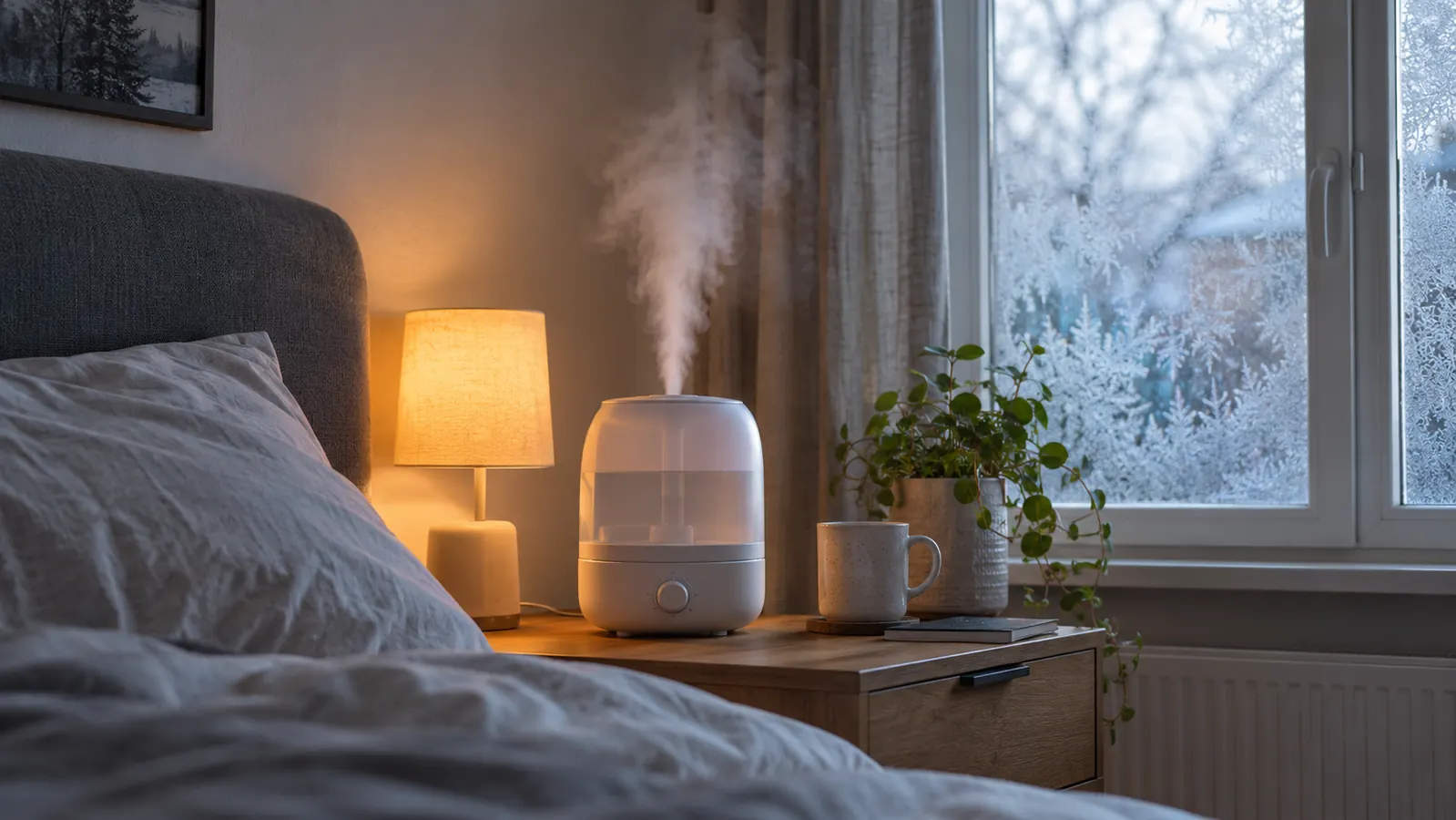
Linda has slept in the guest room for stretches of our marriage, and she will tell you exactly why. I snore. Twenty years of it, loud enough that she started noticing pauses in my breathing, which is how I ended up with a home sleep test, a moderate obstructive sleep apnea diagnosis, and a CPAP machine I have used most nights for about three years now. Our bedroom in Colorado Springs is dry in a way that is hard to explain to people who live at sea level. Winter heat plus this altitude means my nose is crusty by two in the morning and my mouth tastes like I have been breathing through a sock. I bought the Levoit Top Fill Humidifier for that room. Not because I thought it would fix my apnea. It does not, and nothing that sits on a nightstand does. I bought it because I wanted the air itself to stop working against me.
A humidifier is a comfort purchase and I want to be plain about that up front, because this site gets read by people with diagnosed apnea and by the partners who sleep next to them. The last thing anyone needs is another review implying a small appliance is a substitute for a sleep study. Sleep apnea is a medical condition. It needs a doctor, a test, and in my case a machine with a mask. What a humidifier does is change the room, and the room matters more than most people expect when you are wearing a nasal pillow for seven hours. I have run this one through three Colorado winters. Here is what it does well, what it does not, and who I would hand it to.
The Quick Verdict
Quiet enough to sit two feet from a CPAP machine, small enough for a nightstand, and it fills from the top without hauling the tank anywhere. It will not humidify a house, and the knob takes a week to learn.
Amazon Check Today's Price →My snoring was not the fixable part. The bone-dry air was.
2.5 liter tank, up to 25 hours on low, 25 dB. Check today's price and the current specs on Amazon.
Amazon Check Today's Price on Amazon →How I've Used It
It sits on my nightstand, about two feet from my face, which sounds like a questionable place for a container of water until you remember the whole point is putting moisture into the air near the person breathing it. It measures 6.38 inches deep, 7.12 inches wide and 10.14 inches tall, and it weighs 2.2 pounds, so it takes up less room than the lamp on the other side of the bed. Before I bought it I tried the free version first: a shallow pan of water sitting on top of the heat register and a wet towel draped over the back of a chair. The towel smelled like a locker room by day three, and the pan collected a ring of white scale I could not scrub off. Neither one did anything I could measure. Levoit rates this unit for rooms up to 219 square feet. Our bedroom is smaller than that, which is the honest reason it works here. I am not asking a nightstand appliance to humidify a whole floor. I run it on low most nights, because low is where the long run time comes from and low is plenty for a closed bedroom door.
The interface is about as plain as it gets. The listing calls the control method touch, and the mist output runs off one knob with no numbers printed on it, so there is nothing to scroll through and no app to set up on your phone. That lack of markings annoyed me for the first week. Now I know that halfway is right for a normal January night, and a little past halfway is right when the furnace has been cycling hard and the air feels like a hair dryer. The nozzle turns 360 degrees, so I point it up and slightly away from the bed instead of straight at my face. Pointing it at your face sounds appealing and is not. You wake up with a damp pillow and a cold nose.
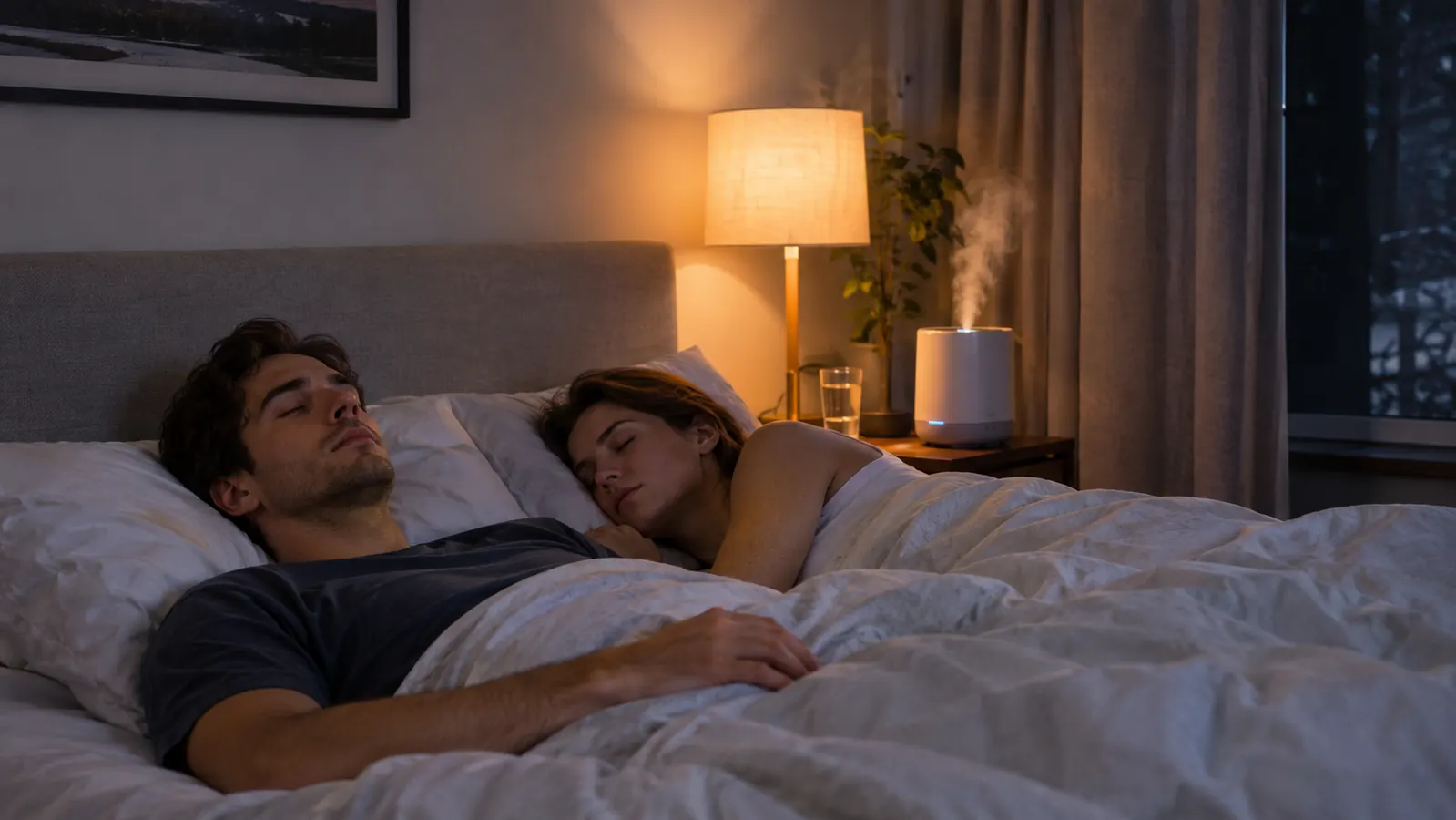
What I noticed, and this is one man's experience in one bedroom rather than a study of anything: my nose stopped feeling like sandpaper by the second week. I still woke up with a dry mouth on some nights, especially when I rolled onto my back and the mask shifted. But the mornings where I felt like I had been breathing cold dust dropped from most nights a week to maybe one. Linda noticed it too, in the sense that the room stopped smelling like hot dust when she came to bed. She sleeps in our room more nights than not now, though I would credit the CPAP for that far more than the humidifier.
What 2.5 Liters Covers in a Colorado Winter
Two and a half liters is on the small side for a humidifier, and I want to be straight about what that means in practice. On low, Levoit says up to 25 hours. I believe it, because I have gone to bed with a full tank and woken up with water still sloshing in it. On high, in a cold snap with the heat running all night, I go through most of a tank overnight and refill in the morning. The week in February two years back, when the overnight low sat near zero for five nights straight, I filled it at nine, refilled it at six, and had maybe an inch of water left by the time I went back to bed that night. That is the trade for a unit this small. If you want to fill something once a week, buy a console humidifier for the hallway and accept that it is a piece of furniture. If you want a thing on your nightstand that you top off with a pitcher before bed, this is sized correctly for that job.
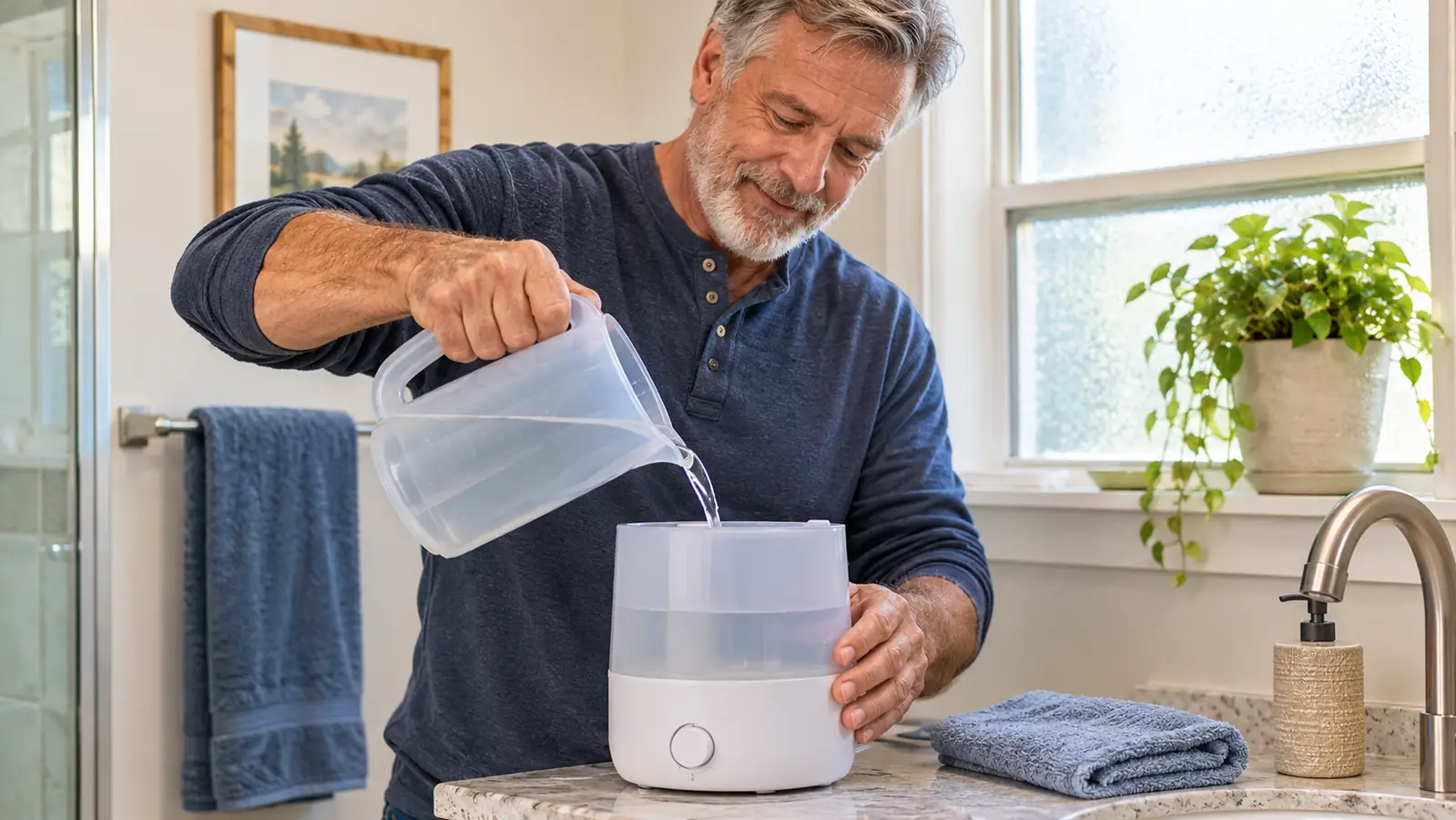
Top fill is the feature I did not know I wanted. The lid comes off, the opening is wide, and I pour from a plastic pitcher without a funnel and without spilling on the nightstand. That wide opening also means I can get my hand inside with the brush that comes in the box, which matters more than the listing lets on, because a humidifier you cannot reach into is a humidifier that starts to smell by February. The tank lifts off if you would rather carry it to the sink and fill it there. I mostly do not. Filling it where it sits is a thirty second job at nine at night, and that is the entire reason it gets done every single night.
The 25 dB Claim Next to a CPAP Machine
Twenty-five decibels is Levoit's number for the quietest setting, and quiet is the only reason I tolerate it within arm's reach. My CPAP machine is not silent. The mask vent hisses, the unit itself has a low hum, and in a quiet house at two in the morning that hum is the loudest thing in the room. The humidifier on low sits underneath it. I have put my hand on the housing to confirm it was still running. On high there is a soft water sound, close to a small fountain, and I can hear it from the pillow. I would not call it loud. I would call it noticeable, and if you need dead silence to fall asleep, run it on low and start it an hour before bed. I tested that on purpose, twice, because I wanted something more than a feeling. On low with the bedroom door shut I cannot hear it from the pillow at all. On high I hear a faint trickle from about four feet away and nothing from across the room.
Here is the practical thing about noise that never makes it into a listing. If you are a light sleeper, or your partner is, a steady low sound masks everything else in the house: the furnace kicking on, a car door two houses down, the refrigerator cycling. That is not a medical benefit and I am not going to dress it up as one. It is a sleep environment benefit. Linda is a light sleeper and she has said the steady sound is why she stopped noticing the furnace at all. Small thing. Small things are what a bedroom is made of.
Twenty-five decibels is a number on a spec sheet. What matters to me is that I have to put my hand on the housing to check whether it is running.
Filling and Cleaning It Before Coffee
Cleaning is the part of humidifier ownership that decides whether you still like the machine in March. Once a week I unplug it, lift the tank, dump whatever is left, wipe the inside with mild soap and warm water, and rinse it twice. The brush that comes in the box gets into the corners where the plastic curves. The water filter sponge sits where it sits and I rinse that too. Everything air dries on a towel by the sink while I have coffee, and I put it back together before I head out. Fifteen minutes, once a week. The weeks I skipped it, I could smell the difference before I could see it. The one time I let it go a full month, back in the first winter, there was a slick film on the inside of the tank and a smell I could not place until Linda walked in and asked what that was. That was the last month I skipped it.
One thing I would tell anyone buying a humidifier for a bedroom: do not let water sit in it for days. If you are going out of town, empty it. The wide top opening on this Levoit makes that easy, which is why I actually do it, and ease is the only reason any maintenance habit survives past January. The other thing is placement. Give it a little space from the wall and keep it back from the edge of the nightstand, so the mist has somewhere to go and so you are not knocking it over in the dark while reaching for a glass of water.
What I Liked
- Fills from the top with a pitcher, no carrying the tank across the room
- Quiet enough on low to sit two feet from a CPAP machine
- Wide opening means you can actually reach inside and scrub it
- Small footprint for a nightstand at 6.38 by 7.12 by 10.14 inches
- Runs up to 25 hours on low per Levoit, which roughly matches what I see
Where It Falls Short
- 2.5 liters needs a refill most mornings during a hard cold snap
- The knob has no markings, so output is guesswork the first week
- Rated for 219 square feet, so it is a bedroom unit and nothing more
- No way to set a target humidity and let it hold there
- You have to clean it weekly or it starts to smell
Where It Falls Short
The honest limits are all about size and control. At 2.5 liters and 219 square feet, this is a one room appliance. Put it in an open living room and it will run all day and change nothing you can feel. The knob is the entire interface, so there is no setting a humidity percentage and no display telling you what the room is sitting at. If you want to know that, buy a cheap separate hygrometer and set it on the dresser. I did. A plain digital unit from the hardware store does the job, and in January it reads in the low twenties with the heat running and the humidifier off, then climbs into the thirties by morning when the machine has run all night on low. That is not a laboratory number, it is one sensor on one dresser, but it is enough for me to know the machine is doing something.
Second limit: this is a cool mist unit, and cool mist puts water into the air without warming it. In a Colorado bedroom in January, a plume of cool mist aimed at your side of the bed is not always welcome, which is why I point the nozzle up and let it fall. If you want warm mist, that is a different machine with a different set of tradeoffs. Third limit: it is plastic, BPA free per the listing, 17 watts, and it looks like exactly what it is. Nobody is going to mistake it for decor.
Who This Is For
This is for the person with a small, dry bedroom who wants the air less punishing and does not want to think about it. It suits a nightstand, a nursery, a kid's room, a home office. It suits anyone who tried a big console humidifier in a hallway and got tired of lugging gallons around. It suits the CPAP user with a dry nose at three in the morning who wants to change the room rather than the mask settings. And it suits the partner of a snorer, honestly, because a humidifier is quiet and steady and gives you something to listen to besides the snoring.
Who Should Skip It
Skip it if you want to humidify more than one room, because 219 square feet is the ceiling and it means it. Skip it if you want to set a target humidity and forget it, because there is no humidistat here, just a knob. Skip it if you need warm mist. Skip it if you will not clean a tank once a week, since any humidifier you neglect becomes a science project. And skip any humidifier entirely if what you are trying to fix is apnea. That is a doctor conversation and a sleep study, not an appliance on a nightstand. A humidifier makes the room easier. It does not treat a medical condition.
If the dry air is the part you can fix, fix that part
2.5 liters, top fill, up to 25 hours on low, 25 dB. Check today's price on Amazon before the next cold snap.
Amazon Check Today's Price on Amazon →