

I started sleeping with a CPAP machine and a nasal pillow mask about three years ago. I still keep a box of Breathe Right Extra Strength strips in the nightstand drawer, and people who see them ask why I bother. Fair question. The machine keeps my airway open. The strip keeps my nose open. Those are two different jobs, and on a dry Colorado night the second one was the job that had me waking at two in the morning with a mouth like a coffee filter.
I am not a doctor and this is not medical advice. I am a 62 year old retired delivery driver in Colorado Springs with moderate obstructive sleep apnea, diagnosed after a home sleep test my doctor ordered when Linda noticed I was pausing in my sleep. Sleep apnea is a medical condition. It needs a doctor and a sleep study. What follows is what I have noticed about one drugstore item, nothing more.
The Strip That Lives in My Nightstand Drawer
Extra strength bands, hypoallergenic adhesive, 26 to a box. See the current count and today's price.
Amazon Check Today's Price on Amazon →It opens the part of your nose that shuts first
Lie on your back and the soft tissue along the sides of your nose falls inward. That is where airflow gets pinched, and it happens before you are fully asleep. The strip uses spring-like bands to pull those side walls out and hold them there. It is not subtle. Within a minute I can feel the difference between pulling air through my nose and pulling it through a pinhole. The first night I wore one, I sat up in bed and checked each nostril out of plain curiosity. The left side, the one that always plugged, moved air. I had not been able to say that in years.
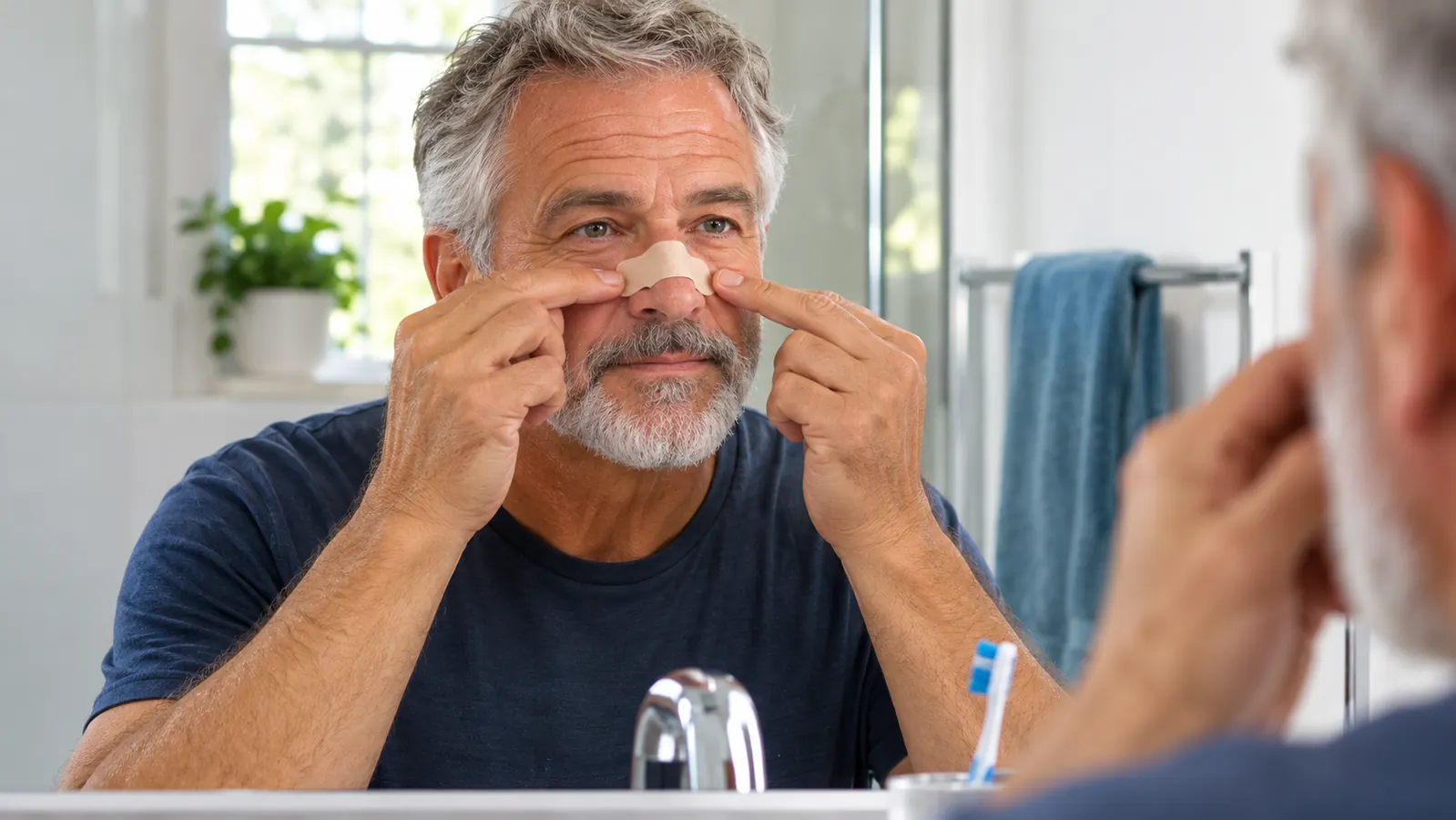
Extra Strength is 50 percent stronger, and at night that is the whole ballgame
The Breathe Right listing says the flexible spring-like bands on Extra Strength are 50 percent stronger than the Original strip. For me that difference decides whether the thing is still on my face at 4 a.m. The Original lifted at the edges by the middle of the night. The Extra Strength version holds through to morning, and I am a side sleeper who rolls onto his back and does not lie still.
Dry winter air stops turning into a mouth-breathing night
Our bedroom is dry most of the year. Colorado altitude plus a furnace running from October to April means the air holds almost nothing. Before the strips, that dryness sealed my nose up by midnight and I finished the night with my mouth open, which left me hoarse and thirsty. With a strip on, the nose stays usable and I wake up with a normal throat instead of a gravel pit.
Ten seconds to put on, and nothing to charge
No hose, no reservoir, no cord, no cleaning routine. Blow your nose, peel the backing, press it down for a few seconds, done. I can put one on in the dark without turning on a light. That sounds like a small thing until you are the guy standing in the bathroom at two in the morning deciding whether the whole routine is worth the trouble. My CPAP routine is not ten seconds. It is a mask rinse, a reservoir fill, a hose check and a filter I forget to change. The strip is the one piece of my night I never dread, and that is why it stayed in the drawer after the novelty wore off.
The adhesive is 3M and hypoallergenic, which my skin noticed
I have had cheap drugstore tapes take the top layer of skin off my nose. These are made with 3M adhesive and they are listed as hypoallergenic, and I have not had a red patch or a sting from them. I still move the strip a quarter inch every few nights. Seven nights a week on the exact same spot will irritate anybody's skin, no matter what the box promises.
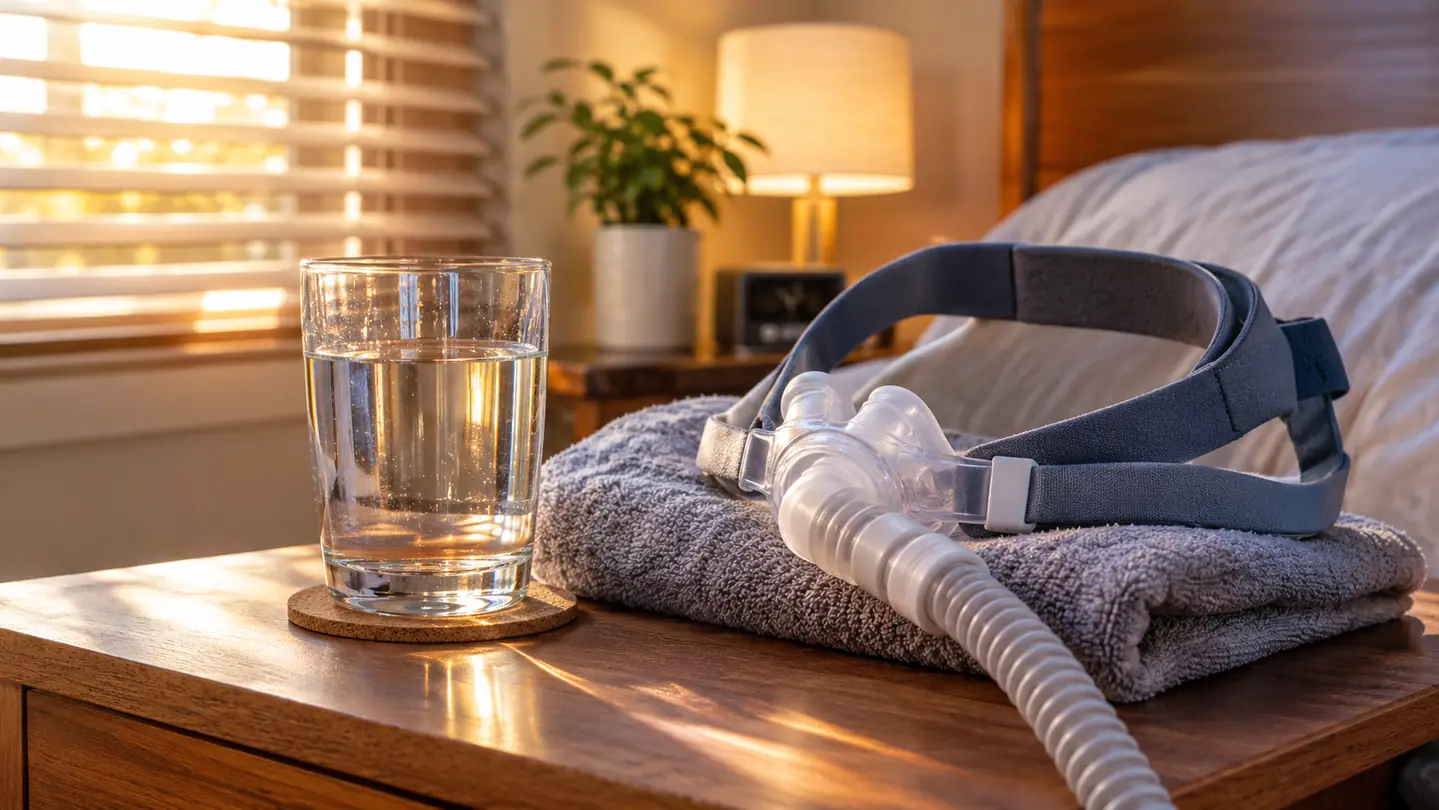
Flexible and non-porous, so a sweaty night does not kill it
The listing describes the Breathe Right strips as flexible and non-porous. In practice that means a hot night, a fan pointed at the bed and a little sweat do not turn the strip into a wet noodle. It stays where I put it. I have had exactly one come loose in three years, and that was my own fault for putting it on over moisturizer.
It rides along with my CPAP mask instead of fighting it
This is the part I did not expect. My nasal pillow mask sits under my nose and the strip sits above it on the bridge. They do not interfere. On nights when my nose is stuffy, the strip makes the pillows easier to wear and I am less likely to pull the mask off in my sleep. Ask your equipment provider before you change anything about your setup. I called mine in the spring of 2023 and asked whether a strip under the pillows was a problem. The answer was no, so long as the mask seal still held. It does. I check that seal every night by running a thumb along the cushion edge.
Linda got her side of the bed back
Snoring is the reason most people buy these, and the listing markets them for snoring due to nasal congestion. That is the honest way to read it. If your snoring comes from a blocked nose, opening the nose helps. If it comes from your airway collapsing, a strip will not fix that, and mine never did. What it did was quiet the congested whistling half of the problem enough that Linda stopped reaching for her pillow.
26 strips is a fair trial without a commitment
A box holds 26 strips. That is nearly a month at one a night, or about six weeks if you only use them on the dry, congested nights. It is long enough to learn whether your problem is nasal or something else entirely. Twenty six strips at one a night ran me from a Tuesday in January to the middle of February, which covers a furnace-dry week and a milder one. I would rather a reader spend a month finding that out than spend a year guessing and buying pillows.
It made the sleep study conversation easier
The strips did not fix my apnea. My home sleep test still came back moderate obstructive sleep apnea and I still needed CPAP. What the strips did was show me plainly that my nose was part of my problem, which pushed me to bring it up with my doctor instead of buying another gadget. If you snore and wake up gasping, get the test. Use the strip while you wait for it.
The machine keeps my airway open. The strip keeps my nose open. Two different jobs, and on a dry night the second one decides how the morning feels.
What I'd Skip
Skip the strip if you have never been tested and you wake up choking, or if your wife has watched you stop breathing. Get the sleep study first. Skip it if you think it replaces CPAP, because it does not, and it is not sold as a treatment for sleep apnea. Skip the no-name strips with stiff bands. Skip wearing one on the same patch of skin for a week straight. I wrote up how the Breathe Right strips have held up over months in a separate piece, and I also put them next to the plastic dilator gadgets in another. Neither one is a substitute for a doctor, and neither one is a substitute for the machine I still strap on every night.
One Box, One Month, One Answer
If your snoring comes from a congested nose, you will know inside a month. If it does not, you will know that too, and you can stop guessing and call your doctor.
Amazon Check Today's Price on Amazon →